
Business Card Etiquette Around the World: A Country-by-Country Guide
The single object most likely to make or break a first impression abroad — and why the same card-handling habit that's polite in one country is careless in another.
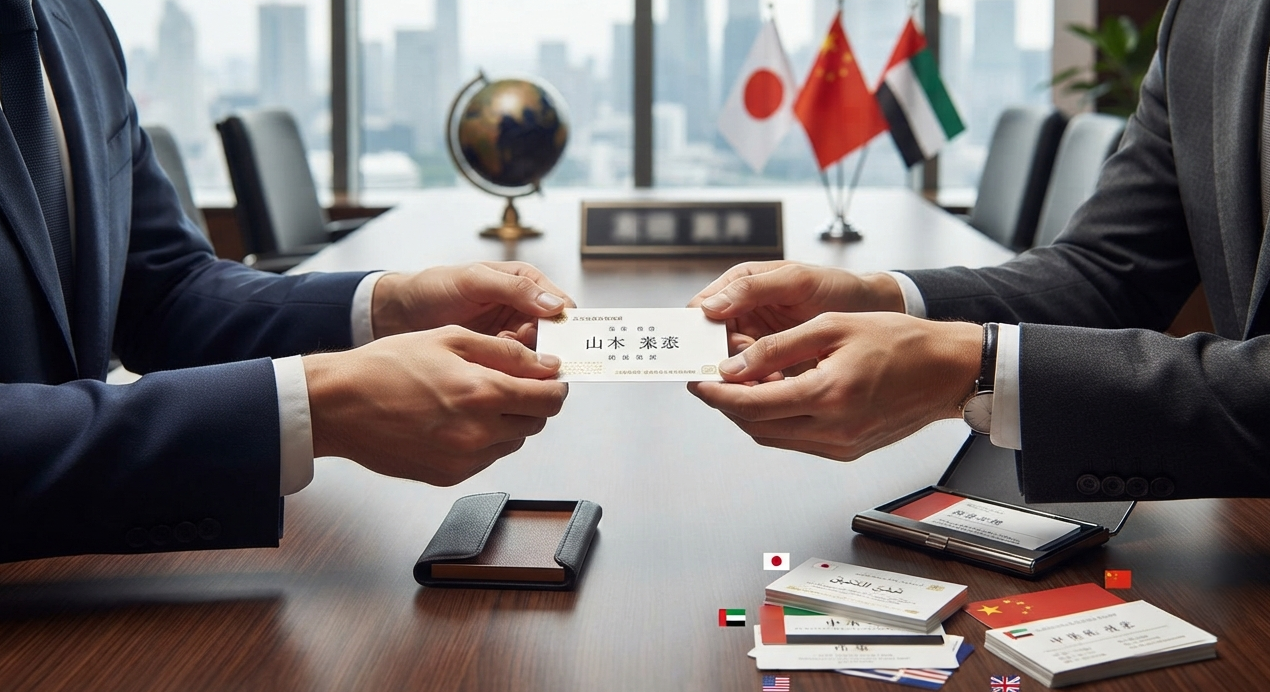
The single object most likely to make or break a first impression abroad — and why the same card-handling habit that's polite in one country is careless in another.
Key Takeaways
- Business card exchange carries the most ceremony in East Asia — Japan, South Korea, and China all expect specific handling that a Western default "quick glance and pocket" habit will visibly violate.
- In several Western business cultures, the card exchange itself is genuinely low-stakes — the mistake there is running out of cards, not mishandling one.
- One habit works almost everywhere as a safe default: present and receive with two hands (or at least your right hand), and actually look at the card before putting it away.
A small object, an outsized signal
Few business rituals vary as sharply across cultures as the humble business card exchange. In some countries it's a five-second formality nobody thinks twice about. In others, it's a small but closely watched test of whether you understand — and respect — the relationship you're about to build. Getting it wrong doesn't usually end a deal on its own, but it does register, sometimes more than a visitor realizes in the moment. Here's how the ritual actually differs, country by country, pulled from our individual guides.
Japan: The Most Ceremonial Exchange in This Guide
Present and receive with both hands, text facing the recipient. Take a genuine moment to read the card on receipt rather than pocketing it. Keep received cards visible on the table in seating order throughout the meeting. Never write on someone's card in front of them, and bring more cards than you think you'll need — running out mid-meeting is a real, if minor, faux pas. Full detail in our Japan guide.
South Korea: Similar Ceremony, Different Order
The two-handed exchange looks similar to Japan's on the surface, but the presentation order differs — the more junior or visiting party typically presents first, a status-linked detail Japan doesn't apply as strictly. Titles printed on the card matter enormously here, since Korean corporate title ladders directly shape how you're expected to address someone afterward. See our South Korea guide.
China: Two Hands, Language Side Facing Out
Both hands for giving and receiving, and if your card has a Chinese-language side, present that side facing your counterpart. Look at the card briefly before putting it away rather than immediately pocketing it. Full detail in our China guide.
Germany: Low Ceremony, High Practical Value
No elaborate ritual here — a straightforward exchange, generally with one hand, is entirely normal. The practical courtesy that does matter: glance at the card rather than pocketing it instantly, and make sure your own contact details and title are accurate and complete, since Germans reference cards for follow-up more literally than as a symbolic gesture. See our Germany guide.
France: Straightforward, With One Detail Worth Knowing
Card exchange in France is fairly unceremonious. The bigger etiquette risk in a French meeting sits elsewhere entirely — in language and formality of address — rather than in the card exchange itself. See our France guide for the areas that matter more.
United Kingdom and United States: Function Over Formality
In both countries, the card exchange is genuinely low-stakes. A brief handoff, sometimes even skipped entirely in favor of a quick phone contact exchange, is normal. The more common mistake in these two markets isn't mishandling a card — it's simply not having one when asked for it. See our UK guide and US guide.
India: Right Hand or Both, Title-Aware
Present and receive with the right hand or both hands together — never the left hand alone. As with much of this series, corporate India (particularly multinational and metro-city settings) treats the exchange more casually than a family-run or more traditional business would. See our India guide.
United Arab Emirates and Saudi Arabia: Right Hand, Arabic Side Facing Out
In both Gulf countries, use the right hand or both hands, and if your card has an Arabic-language side, present it facing your counterpart, particularly if you expect repeat business in the region. See our UAE guide and Saudi Arabia guide.
Nigeria: Right Hand Only, No Exceptions
Never use the left hand to give or receive a card — this is a firm rule, not a soft preference, tied to broader cultural norms around the left hand in Nigeria. Take a genuine moment to look at the card before putting it away. See our Nigeria guide.
The One Habit That's Safe Almost Everywhere
If you only build one universal habit from this guide: present and receive with two hands (or your right hand, at minimum), and actually pause to read the card before putting it away. It's slightly more ceremony than several of these countries strictly require, but it's never read as wrong anywhere in this guide — while the reverse mistake, treating a high-ceremony country's exchange casually, genuinely is.
Common Mistakes to Avoid
- Pocketing a card immediately without looking at it, especially in Japan, Korea, or China.
- Using the left hand in Nigeria, India, or the Gulf countries.
- Writing on someone's card in front of them, particularly in Japan.
- Running out of cards in high-volume meeting settings, especially in East Asia.
- Assuming the exchange is universally low-stakes because it is in your home country.
Frequently Asked Questions
Which countries take business card exchange most seriously?
Japan, South Korea, and China have the most ceremonial expectations in this guide — two-handed exchange, reading the card on receipt, and keeping it visible during the meeting rather than pocketing it immediately.
Is it ever wrong to use two hands when one hand is the local norm?
Generally no — using two hands in a country where one hand is standard, like Germany or the US, isn't read as an error. It's the opposite mismatch (treating a high-ceremony exchange casually) that tends to register as a misstep.
Why does the left hand matter in some countries but not others?
In several cultures, including parts of Africa, South Asia, and the Middle East, the left hand carries negative hygiene-related associations, making it inappropriate for handing over cards, gifts, or food — this isn't a universal rule, but it applies consistently within those specific cultures.
For full country-specific etiquette beyond business cards, see our dedicated guides linked throughout this article.
Related articles
Cross-Cultural Deep Dives • Cross Cultural Deep Dive
Business Dining Etiquette Around the World: What to Know Before the Meal
Who pays, who orders first, and why rushing the meal is a mistake almost everywhere except two countries in this entire guide.
Cross-Cultural Deep Dives • Cross Cultural Deep Dive
How Direct or Indirect Is Business Communication in Your Target Country?
A practical spectrum for calibrating how bluntly — or how carefully — you should expect disagreement, feedback, and refusal to be delivered before your next meeting abroad.
Cross-Cultural Deep Dives • Cross Cultural Deep Dive
Punctuality Norms Around the World: Where "On Time" Really Means On Time
On time" doesn't mean the same thing everywhere — a practical spectrum of what punctuality actually signals in different business cultures, without ranking any of them as better or worse.