
Business Etiquette in Germany vs. France: What Changes Across the Border
Two neighboring economies, two genuinely different playbooks — why a meeting style that works perfectly in Frankfurt can misfire in Paris.
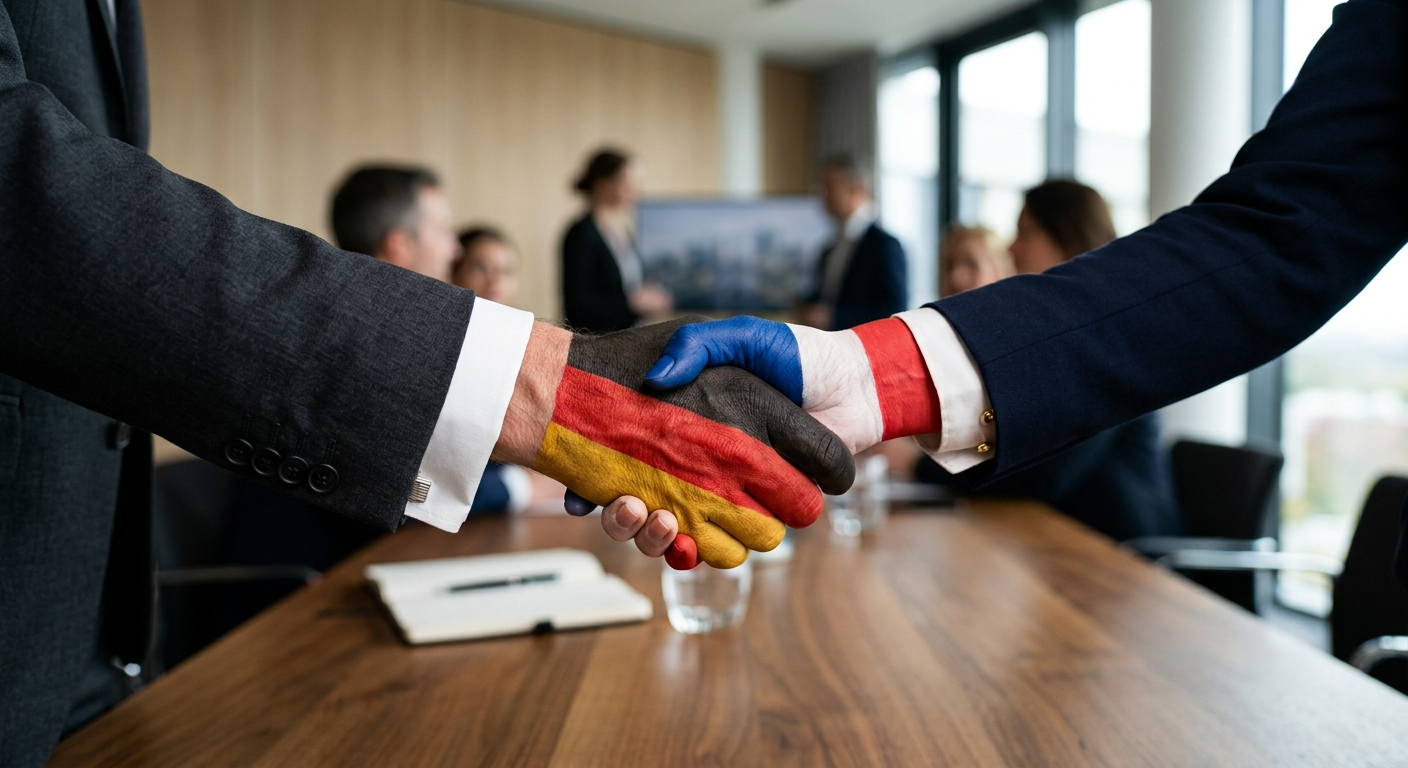
Two neighboring economies, two genuinely different playbooks — why a meeting style that works perfectly in Frankfurt can misfire in Paris.
Key Takeaways
- Germany and France sit right next to each other geographically, but their business cultures diverge sharply on pace, hierarchy, and how much relationship-building has to happen before business gets discussed.
- Germany rewards direct, data-first communication; France rewards more intellectual, argumentative engagement, and treats the business lunch as genuine work, not a break from it.
- The single most common cross-border mistake: applying Germany's brisk, agenda-first meeting style to a French meeting, or bringing France's extended relationship-building expectations into a German one.
Neighbors on the map, different playbooks in the room
Germany and France share a border, a currency, and decades of deep economic integration through the EU — which makes it easy to assume their business cultures have converged too. They haven't, at least not in the ways that matter inside an actual meeting. A German executive who values getting straight to the agenda can read a French counterpart's extended lunch and debate-heavy meeting style as unfocused. A French executive used to intellectual back-and-forth and relationship-first pacing can read German directness as abrupt, even cold. Neither read is accurate — they're just two different systems for building trust and reaching decisions, and knowing which one you're walking into changes how you should prepare.
Side-by-Side Comparison
| Aspect | Germany | France |
|---|---|---|
| Greeting | Firm handshake, brief and businesslike | Lighter handshake; "la bise" among established colleagues, not first meetings |
| Address | Herr/Frau + surname + title (Doktor) until invited otherwise | "Vous" + Monsieur/Madame + surname until invited otherwise |
| Meeting pace | Brief small talk, straight to agenda | Extended relationship-building, especially over meals |
| Business lunch role | Secondary; not central to relationship-building | Central — often where real rapport and negotiation groundwork happen |
| Communication style | Direct, explicit, data-supported claims preferred | Intellectual, argumentative in a constructive sense; understated over superlative |
| Decision-making | Often finalized within the meeting itself if preparation supports it | Frequently deferred; senior figures decide after the meeting |
| Annual scheduling risk | Fewer blanket shutdowns; regional variation in holidays | August is a widely observed slowdown/shutdown period nationally |
The Business Lunch: Optional vs. Central
This is where the two cultures diverge most visibly. In Germany, a working lunch is functional — a break in the day, not a relationship-building ritual. In France, the two-hour lunch with wine and several courses, where actual business terms are raised only in the later stages of the meal, is close to standard practice for anything beyond a routine catch-up. A German executive treating a French lunch invitation as an efficient 30-minute working meal will misread the entire occasion; a French executive expecting the same ceremony in Frankfurt will likely be disappointed by how quickly the meal wraps up and how little "real" conversation happens over it.
Communication: Direct vs. Debated
German communication values precision and directness — a disagreement is stated plainly, and vague enthusiasm without supporting data undermines credibility rather than building it. French communication values intellectual engagement — ideas are expected to be challenged and debated, sometimes at length, before anyone commits to a position, and this debate is a sign of engagement, not hostility. The two styles can look similar on the surface (both involve real pushback rather than polite deference) but the underlying purpose differs: German directness aims to establish facts efficiently; French debate aims to test an idea's substance through discussion. Visitors sometimes mistake French debate for disagreement about the relationship itself, when it's often closer to constructive engagement.
Decision-Making: In the Room vs. After It
German meetings, when well-prepared with solid data, can often conclude with an actual decision on the spot — and once made, that decision is typically treated as firm, with little appetite for revisiting it without new information. French meetings, particularly with more hierarchical companies, more often end with a "we'll be in touch," with the real decision made afterward by senior figures, sometimes following the informal consensus-style process common in more hierarchical business cultures generally. Pushing a French counterpart for an immediate decision the way you might in Germany can come across as impatient or as misunderstanding how the process works here.
If You Only Remember One Thing Per Country
- Germany: Come with data and a clear agenda — preparation is what earns credibility here, not enthusiasm.
- France: Never rush the business lunch — treat it as genuine relationship-building work, not a break from the real meeting.
Common Mistakes to Avoid
- Applying Germany's brisk, agenda-first pace to a French meeting. It can read as rushing the relationship rather than being efficient.
- Bringing France's extended small-talk expectations into a German meeting. It can read as unfocused or unprepared.
- Mistaking French intellectual debate for a sign the deal is at risk. Vigorous discussion of ideas is normal and often a good sign.
- Pushing for an immediate decision in France the way you reasonably might after a well-prepared German meeting.
- Scheduling anything important in France during August without checking whether your counterparts will actually be reachable.
In simple words
Germany and France may share a border, but they don't share a business playbook. Germany rewards preparation, directness, and efficient decision-making; France rewards patience, intellectual engagement, and genuine investment in the relationship, especially over a meal. Adjust your pace and expectations at the border, not just your language.
Frequently Asked Questions
Is business etiquette really that different between Germany and France?
Yes, more than the geographic proximity suggests. Meeting pace, the role of the business lunch, communication style, and how decisions get made all differ meaningfully, even though both are Western European economies with close trade ties.
Why do French meetings often end without a decision?
Decision-making in French business culture is frequently deferred to senior figures after the meeting, especially in more hierarchical companies — this is different from Germany, where a well-prepared meeting can often conclude with a firm decision on the spot.
Is French debate a sign that a deal is in trouble?
Not usually. Vigorous intellectual debate over an idea's substance is a normal and often positive sign of engagement in French business culture, distinct from genuine disagreement about the relationship itself.
Should I schedule a business trip to France or Germany in August?
Avoid France if possible — many French companies slow down significantly during this period. Germany doesn't have the same nationwide shutdown pattern, though regional holidays can still affect scheduling.
How should I adjust my communication style moving between the two countries?
In Germany, lead with data and be direct about disagreement. In France, expect and engage with intellectual pushback, and avoid over-relying on enthusiastic, superlative-heavy language, which tends to land better in the US than in either of these two markets.
This guide compares general, commonly observed business customs in Germany and France. For full detail on each country individually, see our dedicated guides to Business Etiquette in Germany and Business Etiquette in France.
Related articles
Comparison Guides • Comparison Guide
Business Etiquette in Brazil vs. Mexico: Latin American Business Culture Compared
Two of Latin America's largest economies, one lazy assumption — why treating Brazilian and Mexican business culture as interchangeable costs visitors more than they realize.

Comparison Guides • Comparison Guide
Business Etiquette Across the Middle East: UAE vs. Saudi Arabia
Two Gulf neighbors, two different paces — why the more relaxed rhythm of Dubai doesn't prepare you for how much slower and more relationship-driven business moves in Riyadh.
Comparison Guides • Comparison Guide
Business Etiquette in the US vs. UK: Subtle but Important Differences
Same language, genuinely different meanings — why American enthusiasm and British understatement so often talk past each other in the same meeting.